
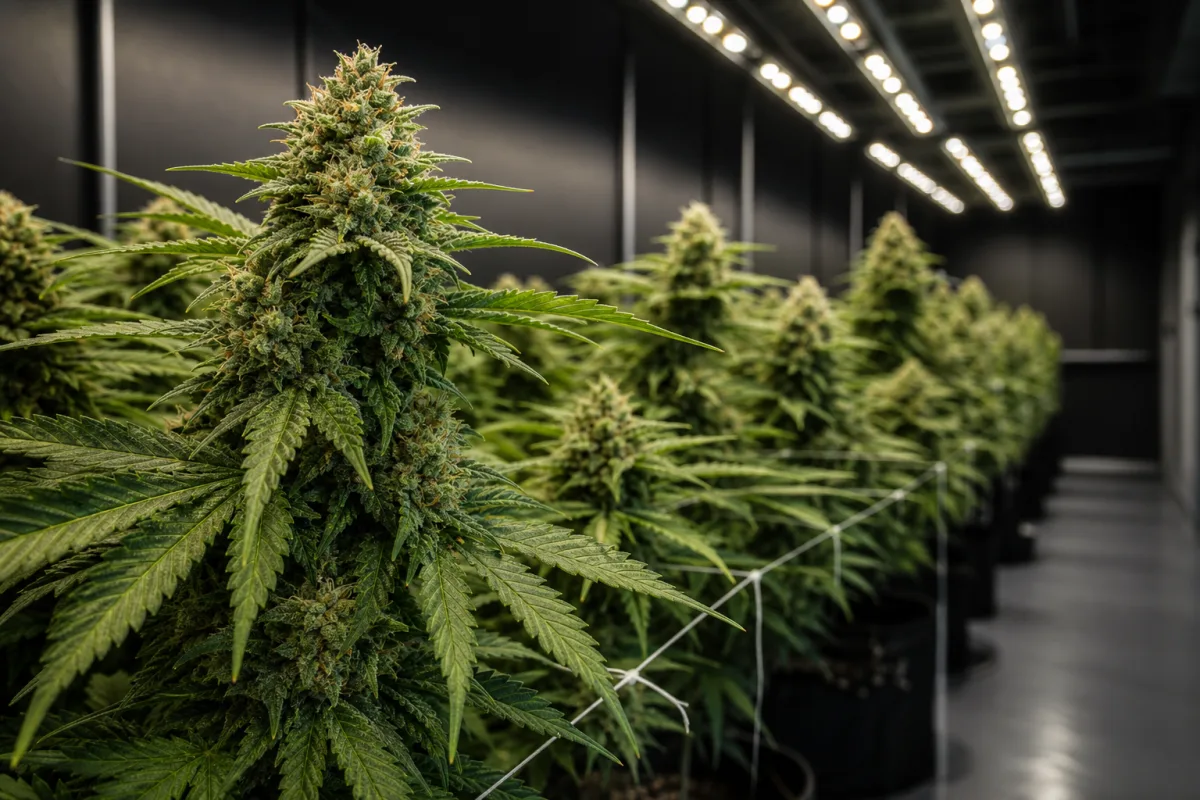
From seed to flower
The cannabis life cycle is often described in stages: germination, seedling growth, vegetative growth, flowering, and maturation. During vegetative growth, the plant develops roots, stems, and leaves. During flowering, it forms inflorescences—the clusters commonly called flowers. Glandular structures called trichomes develop on aerial plant surfaces and are important sites for cannabinoid and terpene production.
Cultivation environments
Cannabis may be cultivated outdoors, in greenhouses, or in indoor controlled environments where permitted by law. Outdoor cultivation relies on local daylight and weather. Greenhouses combine sunlight with varying degrees of environmental control. Indoor facilities use equipment to manage light, temperature, humidity, air movement, water, and nutrition. Each approach creates a different set of conditions; none is a single, uniform method.
Light duration helps regulate plant development, while light intensity and spectrum can influence plant form and yield. Temperature, humidity, irrigation, nutrition, pests, and plant spacing also affect growth. The same genetic line can therefore show differences when cultivated under different conditions.
Harvest and post-harvest handling
Cultivation does not end when a plant is cut. Harvest timing, drying, storage, exposure to oxygen and light, and handling conditions can affect moisture and the stability of plant compounds. Laboratory results describe the submitted sample at a point in time, not every plant that shares its name.
Strains, cultivars, and chemovars
“Strain” is common marketplace language, but it is not always a reliable scientific classification. A cultivar is a cultivated plant variety selected for particular inherited traits. A chemovar groups material by measured chemistry, such as cannabinoid and terpene profiles. Research comparing commercial samples has found that many different strain names may overlap chemically and that identical names do not guarantee identical profiles.
Names can describe lineage or convention, but genetics, environment, and post-harvest handling all matter. For chemical information, a current laboratory report is more specific than a strain name alone.