
What is a cannabinoid?
Cannabinoids are a family of compounds associated with the cannabis plant. Researchers have identified more than one hundred cannabinoids, although only a smaller group appears regularly on consumer labels. Plant material commonly contains acidic cannabinoid forms like THCA, which is non-psychoactive. Heat and time can remove a carbon dioxide group through a process called decarboxylation, changing those compounds into neutral forms, like THC, which is a psychoactive component of cannabis.
THC and THCA
Delta-9-tetrahydrocannabinol is usually shortened to THC. It is the principal psychoactive cannabinoid in cannabis. Fresh plant material primarily produces tetrahydrocannabinolic acid, or THCA, rather than THC itself. Heating can convert THCA into THC. This is why laboratory reports may list THCA, THC, and a calculated “total THC” value separately.
CBD and CBDA
Cannabidiol, or CBD, is another well-known cannabinoid and is not generally considered intoxicating. Its acidic precursor is cannabidiolic acid, or CBDA. As with THCA, heat can convert CBDA into its neutral form. The relative amounts of THC-related and CBD-related compounds are sometimes used to group plants into broad chemical types.
What is a terpene?
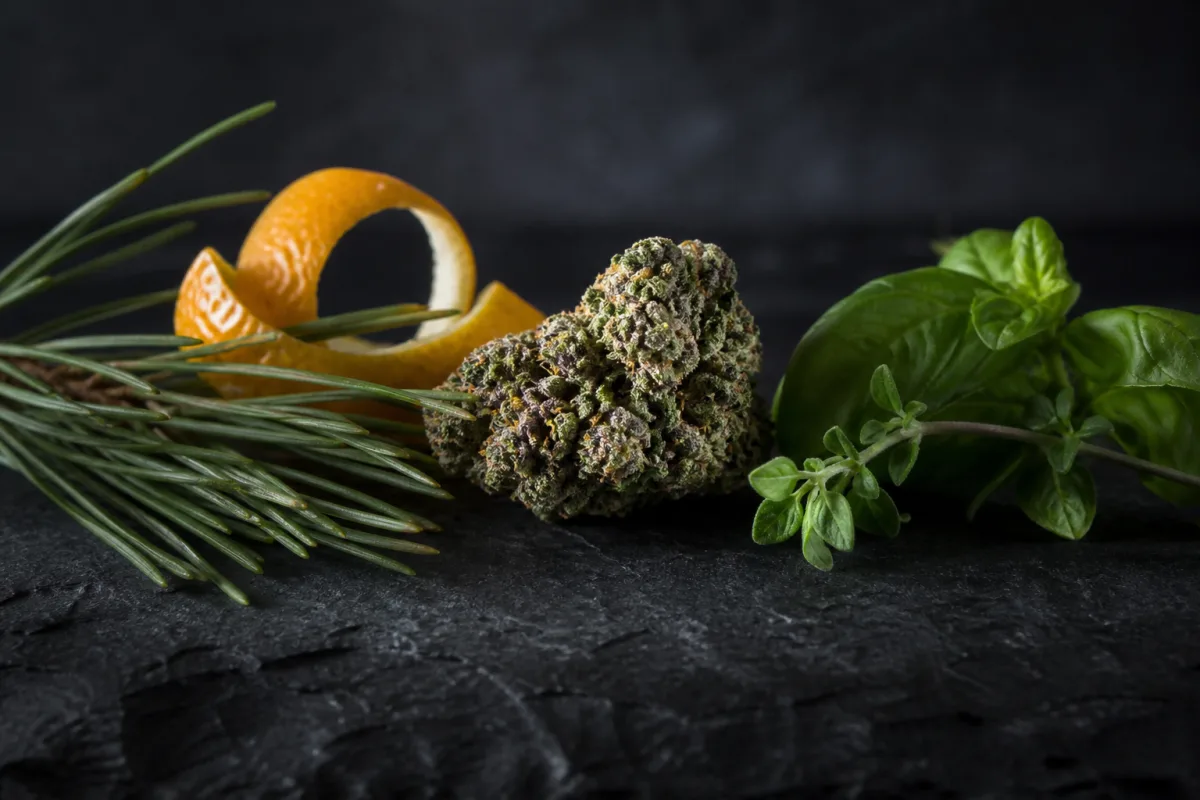
Terpenes are aromatic compounds found throughout the plant kingdom. They contribute to the scents of many flowers, fruits, herbs, and trees. Cannabis can contain terpenes such as myrcene, limonene, pinene, linalool, and beta-caryophyllene, but the amounts vary among samples. Terpenes are not cannabinoids, even though both groups are part of the plant’s chemistry.
Profiles instead of promises
A laboratory profile is a measurement of a particular sample. It may report cannabinoid percentages or milligrams and, when tested, terpene concentrations. Genetics, cultivation conditions, harvest timing, processing, storage, and laboratory methods can all influence a reported profile. A chemical profile describes what was measured; it does not by itself predict an individual experience or establish a health outcome.
THC, CBD, and terpenes are useful vocabulary for reading scientific and label information. The most precise approach is to treat them as measured chemical components rather than as marketing categories or medical promises.